
2026-08-22 · Jim McGuiness
Tankless vs. Traditional Water Heater Costs
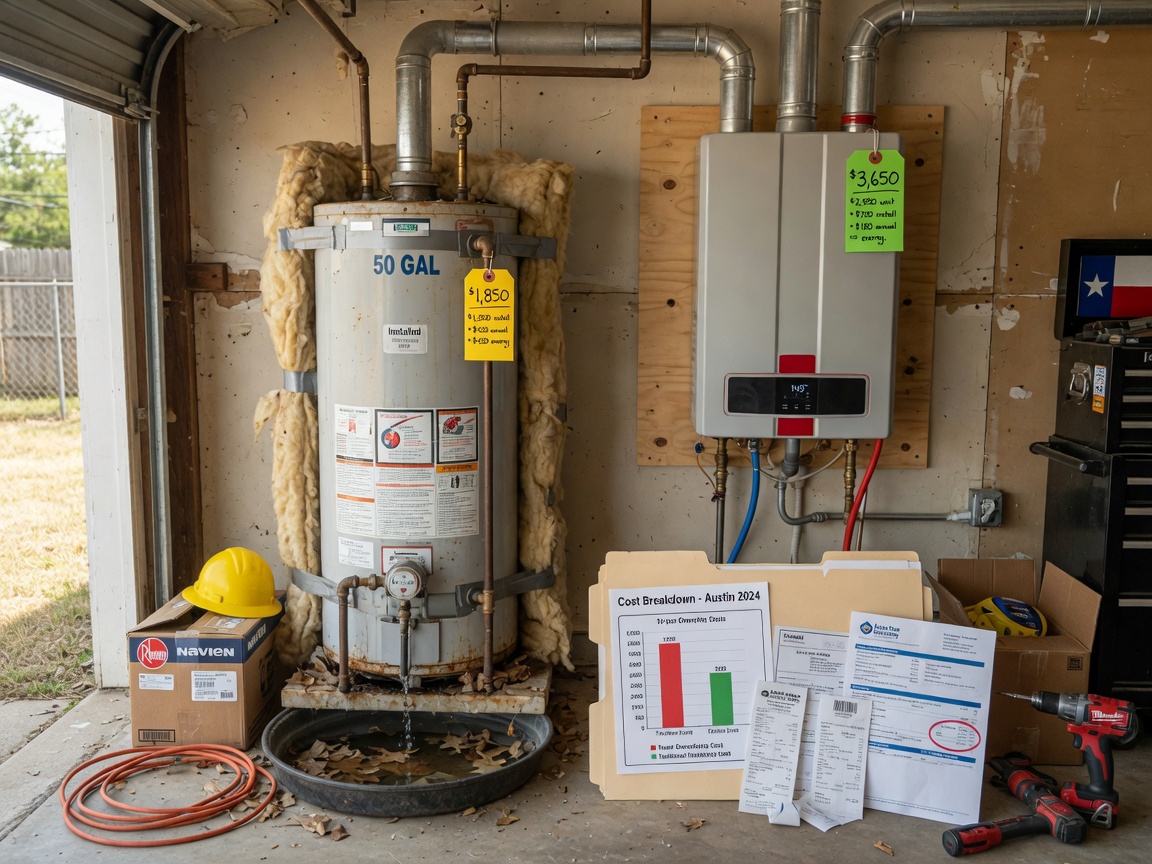
Tankless water heaters installed in Austin homes cost $2,800–$5,200 while traditional tank models run $1,400–$2,900. These ranges cover equipment, labor, permits, and basic venting or electrical upgrades common in Travis County. Prices shift with home age, fuel type, and whether the job requires running new gas lines or upgrading panels in older properties.
Upfront Installation Costs in Austin Neighborhoods
Homes in Clarksville and Hyde Park often date to the early 1900s, so crews frequently spend extra time rerouting vents or reinforcing floors for 40- or 50-gallon tanks. East Austin and South Congress properties built in the 1950s–1970s may need new gas lines when switching to tankless, adding $600–$1,200. Newer builds in Mueller or Barton Hills usually accept tankless units with fewer modifications because they already have modern venting and 200-amp service. Round Rock, Pflugerville, and Cedar Park homes follow similar patterns, with tankless jobs averaging $3,400–$4,800 when the existing water heater is electric. Traditional replacements stay lower at $1,600–$2,400 because they reuse existing connections more often.
Operating Costs During Hot Summers and Mild Winters
Austin’s hot humid summers push daily hot-water use higher, especially in households with multiple showers or irrigation needs near Zilker Park and Lady Bird Lake. Tankless units save on standby losses during these months because they heat water only on demand, trimming $25–$45 from monthly bills compared with a tank that stays at 120 °F year-round. Mild winters reduce overall heating load, so the efficiency gap narrows but still favors tankless by roughly $180–$280 annually in Travis County. Electric tank models paired with Austin Energy rates can cost $35–$55 more per month than gas tankless in high-use homes. Homeowners in Westlake and Tarrytown who track usage often see payback periods of 8–11 years when replacing an aging tank with a high-efficiency tankless model.
Lifespan, Replacement Timing, and Maintenance Factors
Traditional tanks in Austin typically last 8–12 years before sediment from hard Travis County water shortens performance. Tankless units commonly reach 15–20 years when descaled annually. How Long Do Water Heaters Last in Texas? explains the local variables that affect these timelines. Replacement jobs in Downtown or Travis Heights often coincide with kitchen or bath remodels, allowing crews to upgrade to tankless without extra drywall work. Water Heater Replacement crews note that spring wildflower season brings higher call volume because homeowners schedule work before summer heat arrives. Proper maintenance, detailed in How to Maintain a Water Heater in Texas, keeps both types running efficiently and prevents premature failure in humid conditions.
Choosing the Right Option for Your Austin Home
Gas tankless units suit larger households in Zilker or Barton Hills that need simultaneous hot water at multiple fixtures. Electric tankless models fit smaller homes or condos in Clarksville where gas lines are absent. Traditional tanks remain practical for single-bath homes or rental properties where lowest upfront cost matters most. Crews available 24 hours, 7 days a week can assess venting routes, panel capacity, and water pressure on-site before quoting exact figures. The decision ultimately rests on expected occupancy, fuel availability, and how long the owner plans to stay in the property.