
2026-08-22 · Jim McGuiness
How Does a Water Heater Work?
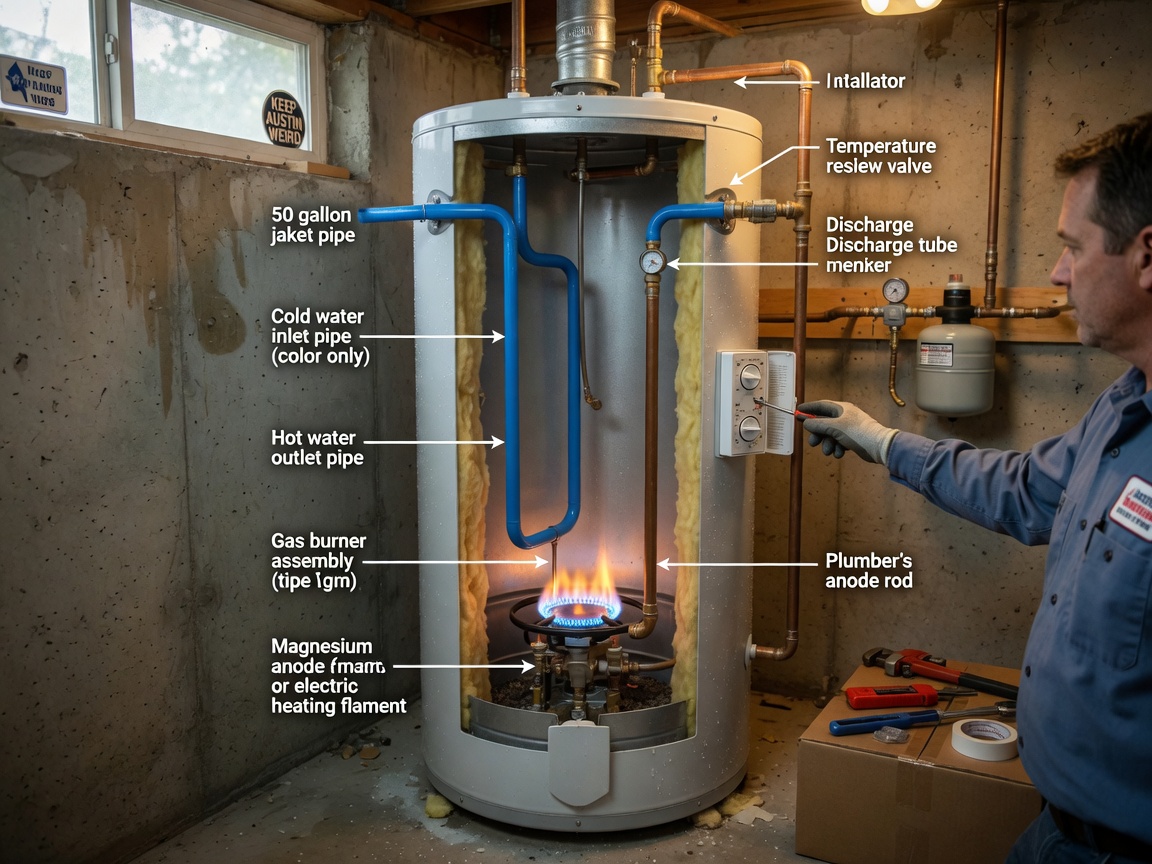
A water heater works by taking cold water from the municipal supply, heating it to 120–140°F through gas burners or electric elements, and delivering it to fixtures throughout the home. In storage models the heated water sits in an insulated tank until needed, while tankless units heat water only when a tap opens. Both approaches rely on thermostats and safety valves to prevent overheating or pressure buildup.
Storage Tank Operation in Detail
Storage tank units remain the most common choice across Austin neighborhoods such as Hyde Park, Clarksville, and Travis Heights. Cold water enters at the bottom of the 40- to 80-gallon tank while a gas burner or electric elements raise the temperature. A dip tube keeps incoming cold water from mixing directly with the hot layer at the top. The thermostat cycles the heat source on and off to maintain the set range. In Travis County’s mild winters the lower incoming groundwater temperature still requires steady energy input, yet the real workload spikes during hot humid summers when residents use more water for showers and irrigation. Sediment from Austin’s mineral-rich supply settles at the tank bottom over time, insulating the burner or elements and shortening the typical 8–12 year lifespan. Flushing the tank annually removes this buildup and restores efficiency.
Tankless Water Heater Mechanics
Tankless models heat water instantly as it flows through a heat exchanger triggered by a flow sensor. When demand stops, the unit shuts down, eliminating standby losses that occur in tank systems. In East Austin and Zilker homes with smaller square footage, these compact units free up closet space. However, simultaneous draws from multiple fixtures can exceed the unit’s flow rate, especially during peak summer evenings when outdoor temperatures push indoor water use higher. Proper sizing based on the home’s peak demand in gallons per minute prevents cold-water surprises. Gas models require adequate venting and sufficient gas line capacity, conditions that older homes in Barton Hills often need upgraded before installation.
Local Climate and Terrain Effects
Austin’s hot humid summers raise incoming water temperature slightly, which can improve efficiency but also increases corrosion risk on metal components. Mild winters with occasional freezes near Mount Bonnell or along Lady Bird Lake shorelines mean pipes in unconditioned spaces need protection. Spring wildflowers signal rising pollen counts that can clog air intakes on outdoor tankless units if not cleaned. Soil conditions in Westlake and Mueller vary from clay to limestone, affecting how easily new lines are run during replacement projects. Homeowners in Round Rock, Pflugerville, and Cedar Park face similar patterns because the same Edwards Plateau geology and water chemistry extend across northern Travis County.
Maintenance Practices That Extend Service Life
Regular checks of the temperature-pressure relief valve, anode rod condition, and thermostat calibration keep units operating safely. In older stock found in South Congress and Mueller, adding a water softener or sediment filter upstream reduces scale on heating surfaces. For residents considering upgrades, comparing repair versus replacement timelines helps decide when an 8–12 year old unit should be swapped. Water Heater Repair vs. Replacement: Which Makes Sense? outlines cost factors and decision points specific to local housing ages. Signs Your Water Heater Is Failing lists early indicators that appear frequently in Travis County homes. When new equipment is needed, Water Heater Installation and Water Heater Replacement cover both tank and tankless options sized for Austin demand.