
2026-08-22 · Jim McGuiness
Signs Your Water Heater Is Failing
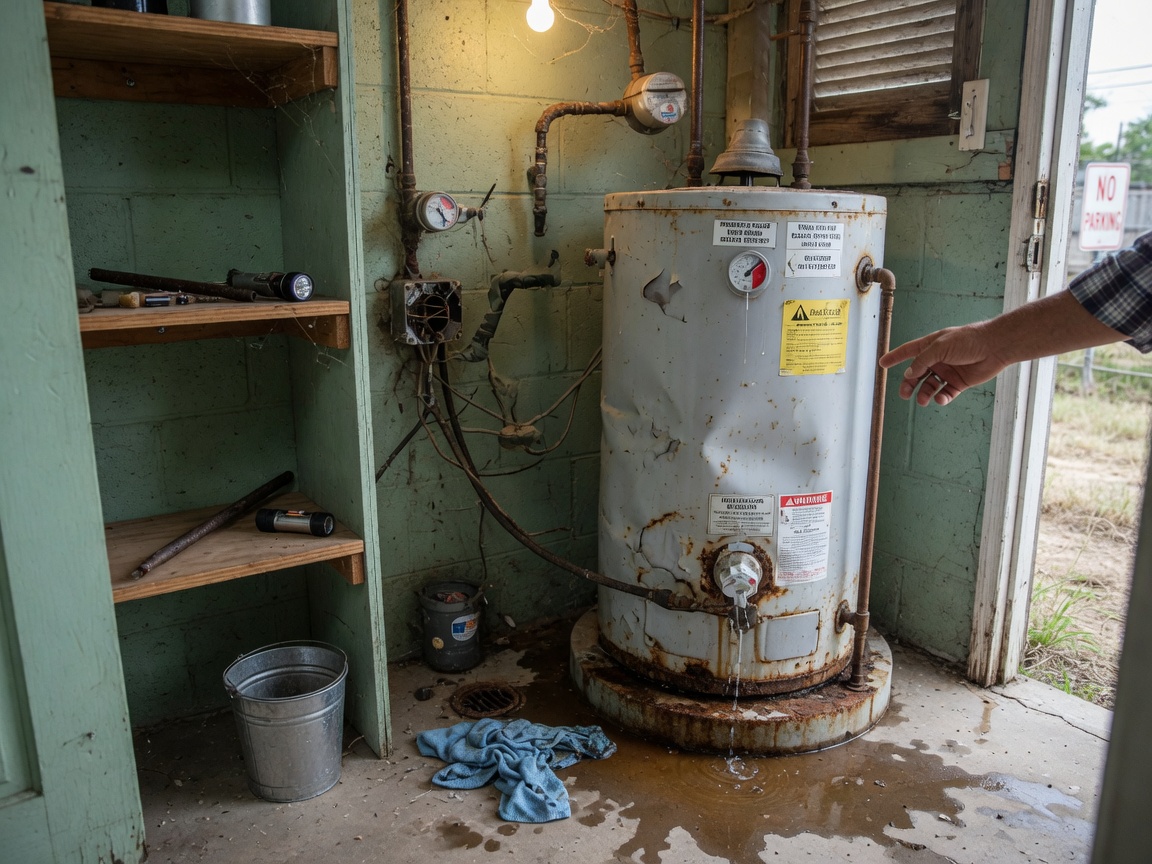
Most water heaters in Austin begin showing clear failure signs between 8 and 12 years of service. Homeowners in neighborhoods like Hyde Park and Clarksville often see the first clues through rusty water, popping sounds, or sudden drops in hot water supply during peak summer demand. These patterns appear because local homes built before 1980 frequently contain galvanized pipes that accelerate sediment buildup when paired with the area's hard water from the Edwards Aquifer.
Rusty or Discolored Water
Rust in the hot water line usually starts at the bottom of the tank where sediment settles. In East Austin and Travis Heights, where many homes still rely on original plumbing from the 1960s, this discoloration shows up faster during the humid summer months when usage spikes. If the water runs brown only from the hot tap, the tank lining has likely begun to corrode. Homeowners who flush their tanks annually can sometimes slow this process, but once rust reaches fixtures, replacement often becomes the practical next step rather than repeated flushing.
Strange Noises from the Tank
Popping, rumbling, or hissing sounds develop when mineral deposits harden on the heating element. Barton Hills and Zilker properties sit on limestone terrain that contributes extra calcium, making these noises more common than in softer-water regions. The sound intensifies after mild winters when temperature swings stir up settled debris. Persistent noise usually means the element is working harder and will eventually fail, especially in homes where the unit has already passed the 10-year mark.
Inconsistent Water Temperature
Temperature fluctuations often signal a failing thermostat or sediment layer insulating the heating element. Residents near the University of Texas Tower and Mueller report this issue most during spring when wildflower season brings higher household occupancy and longer showers. If the water alternates between scalding and lukewarm within minutes, the dip tube may be cracked or the element partially shorted. Checking the thermostat setting first rules out simple adjustments before deeper diagnostics are needed.
Visible Leaks or Moisture Around the Unit
Small puddles beneath the tank or moisture on nearby walls point to failing seals or tank corrosion. In Downtown and South Congress buildings with limited crawl space, these leaks quickly reach subfloors and cause secondary damage. The combination of hot humid summers and occasional heavy spring rains increases the speed at which small drips turn into larger problems. Any active leak requires immediate attention because pressure inside the tank can cause sudden rupture.
Age and Local Usage Patterns
Water heaters in Round Rock, Pflugerville, and Cedar Park typically last 10 to 12 years when properly maintained, while units in older Clarksville homes may need attention closer to 8 years due to original piping. The mild winters reduce freeze risk but the long, hot summers increase daily hot water demand from air conditioning and outdoor activities near Lady Bird Lake. Tracking the installation date on the unit helps homeowners anticipate replacement before complete failure occurs.
When these signs appear together, most Austin homeowners schedule an inspection rather than waiting for total breakdown. Water Heater Repair can sometimes extend life by a year or two, while Water Heater Replacement becomes necessary once the tank shows multiple failure points. For units that run constantly, the article Why Does My Water Heater Keep Running? explains additional troubleshooting steps. Lone Star Water Heater Pros remains available 24 hours a day, 7 days a week, to assess units in any Travis County neighborhood.