
2026-08-22 · Jim McGuiness
Why Does My Water Heater Keep Running?
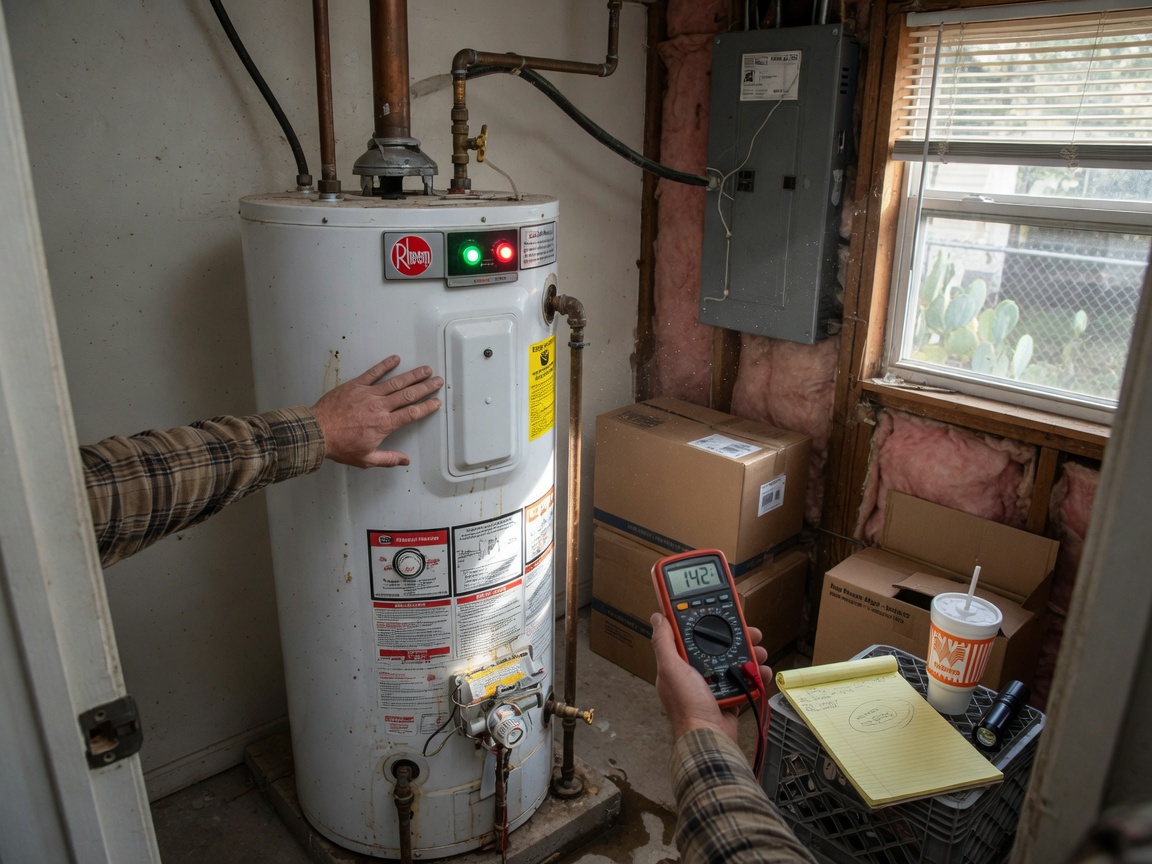
Your water heater keeps running most often because the thermostat fails to shut off the heating element or burner once the target temperature is reached, or because sediment layers at the tank bottom insulate the water and force longer cycles. In Travis County homes this shows up frequently in 40-gallon and 50-gallon tanks installed ten or more years ago.
Thermostat and Heating Element Problems
Older homes in Hyde Park, Clarksville, and Travis Heights commonly have original electric water heaters whose thermostats drift over time. When the upper or lower element stays energized past 120 degrees the unit never cycles off. A quick test with a multimeter at the thermostat terminals reveals whether the switch is stuck closed. Replacement thermostats cost $20 to $60 and take under an hour, yet many homeowners overlook this because the symptom feels like high usage rather than a fault. In homes near Lady Bird Lake or Zilker Park, where summer humidity spikes demand for hot showers, a drifting thermostat can push monthly electric bills up noticeably before any leak appears.
Sediment Buildup from Local Water Conditions
Austin's municipal supply carries moderate hardness that leaves calcium and magnesium deposits inside tanks. Over 8 to 12 years these layers thicken at the bottom, especially in gas models serving South Congress and East Austin bungalows. The burner or element then runs longer to transfer heat through the scale. Flushing the tank twice a year with a garden hose until the water runs clear removes most loose sediment. When the dip tube has already deteriorated, however, full Water Heater Replacement becomes the practical next step rather than repeated flushing.
Continuous Demand from Household Patterns
Large households in Mueller or Barton Hills with teenagers and multiple bathrooms can draw hot water steadily from 6 a.m. to 10 p.m. In these cases the water heater appears to run nonstop simply because recovery time never catches up. Switching to a larger tank or adding a Tankless Water Heater Installation sized for the fixture count often resolves the perception. Checking the temperature setting first, however, prevents unnecessary upgrades; many units arrive set at 140 degrees when 120 degrees meets code and cuts runtime.
Insulation and Pipe Heat Loss in Mild Winters
Mild winters in Travis County still allow overnight temperature drops that cool exposed pipes in crawl spaces under Westlake and Zilker homes. Poor tank insulation or missing pipe wraps forces the heater to reheat water that cooled overnight. Adding an R-12 blanket to an older tank and insulating the first six feet of hot and cold lines reduces standby loss without touching the thermostat. Homes near Mount Bonnell with metal roofs and attic tanks see the same effect during rare cold snaps when attic temperatures fall faster than the surrounding air.
When Ongoing Runtime Signals Replacement
If flushing, thermostat replacement, and insulation upgrades do not restore normal 3-to-5 minute cycles, the tank likely has internal corrosion or a failing dip tube. Review the article When Should You Replace Your Water Heater? for age-based guidance. In neighborhoods such as Downtown and University of Texas Tower area, where many 1970s and 1980s homes still have original units, replacement often coincides with upgrading to a hybrid or gas model that handles Austin's hot humid summers more efficiently. Lone Star Water Heater Pros remains available Open 24 Hours, 7 days a week for same-day diagnostics in Round Rock, Pflugerville, and Cedar Park when runtime issues appear suddenly.