
2026-08-22 · Jim McGuiness
How Long Do Water Heaters Last in Texas?
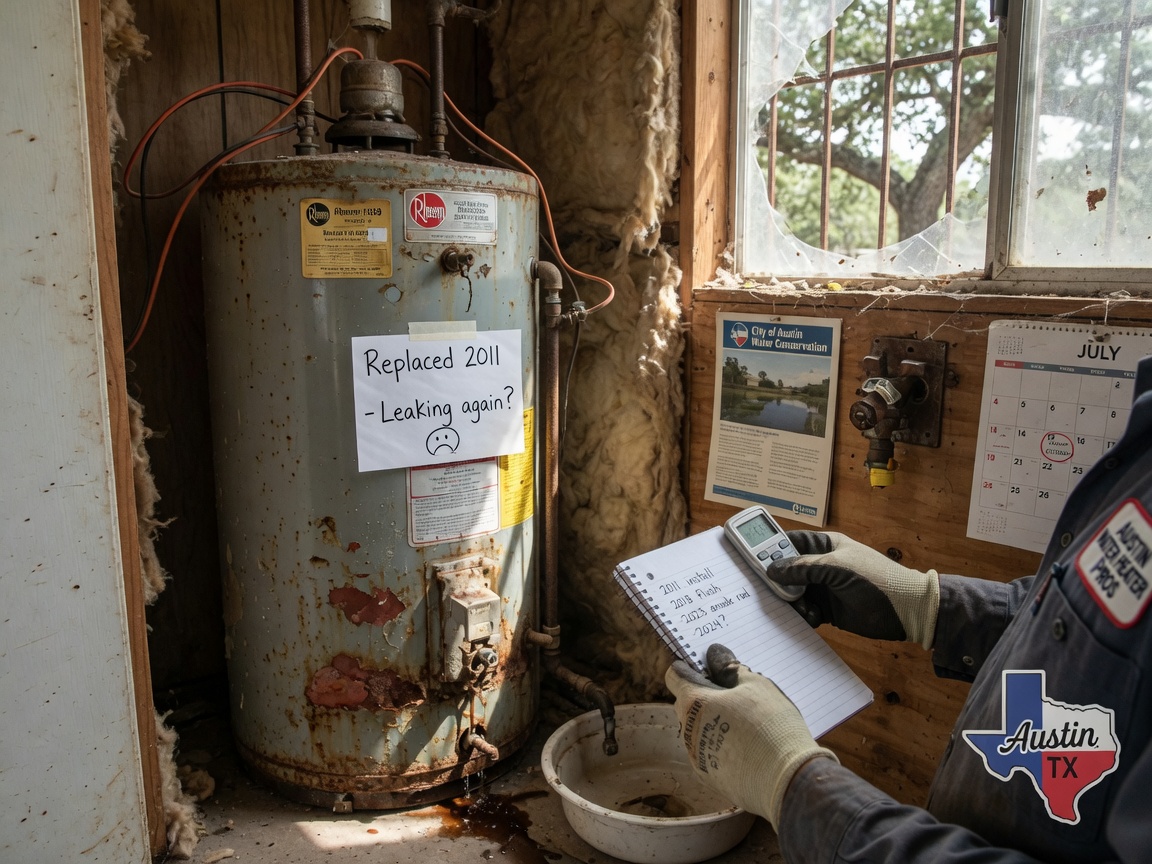
In Austin and the surrounding Travis County communities, water heaters typically last 8–12 years for standard tank models and 15–20 years for tankless units. This range holds across areas from Downtown and South Congress to East Austin and Westlake, where daily use patterns and seasonal temperature swings set the baseline before other factors shorten or extend service life.
Climate Impact on Water Heater Longevity
Austin’s hot humid summers and mild winters with spring wildflowers create steady demand on water heaters year-round. High summer humidity increases corrosion risk inside tanks, especially in homes near Lady Bird Lake or Zilker Park where groundwater temperatures stay warmer. Mild winters reduce freeze-related stress compared with northern Texas cities, yet the constant heat accelerates sediment buildup in 40- and 50-gallon tanks common in Barton Hills and Mueller residences. Homeowners in Round Rock, Pflugerville, and Cedar Park notice similar patterns because the same humid air mass covers the entire metro region.
Housing Stock Differences Across Austin Neighborhoods
Older homes in Hyde Park, Clarksville, and Travis Heights often contain original or first-replacement units installed decades ago, pushing many systems past the 10-year mark before failure. These properties frequently have smaller closets or attic placements that trap heat and shorten component life. Newer construction in Mueller and Westlake tends toward larger 50- or 80-gallon tanks or hybrid models that handle higher occupancy loads better. In each case the age of the home and its plumbing layout determines how quickly scale and corrosion appear.
Tank vs Tankless Performance in Local Conditions
Standard tank units in Austin homes average 8–12 years before anode rod depletion or tank rust requires Water Heater Replacement. Tankless systems, popular in energy-conscious households near the University of Texas Tower and Mount Bonnell, routinely reach 15–20 years when properly sized for peak summer demand. The choice between the two affects not only upfront cost but also how often homeowners in Zilker or Barton Hills schedule service visits during the hottest months.
Maintenance Practices That Extend Service Life
Annual flushing removes sediment that accumulates faster in Austin’s mineral-rich water, adding 2–4 years to a tank’s life. Checking the anode rod every three years prevents premature tank failure, a step especially useful for units in East Austin and South Congress where older galvanized lines accelerate corrosion. Homeowners who follow these steps in neighborhoods from Clarksville to Cedar Park report fewer emergency calls during peak summer usage.
When to Plan Replacement in Travis County
Watch for rust-colored water, inconsistent temperatures, or unusual noises that signal the end of the 8–12 year window for most tank models. Scheduling Water Heater Maintenance before these signs appear helps residents in Pflugerville and Round Rock avoid mid-summer failures. For those comparing options, the guide Tank vs. Tankless Water Heaters: Which Is Better? outlines capacity and efficiency differences relevant to Austin’s climate.