
2026-08-22 · Jim McGuiness
Tank vs. Tankless Water Heaters: Which Is Better?
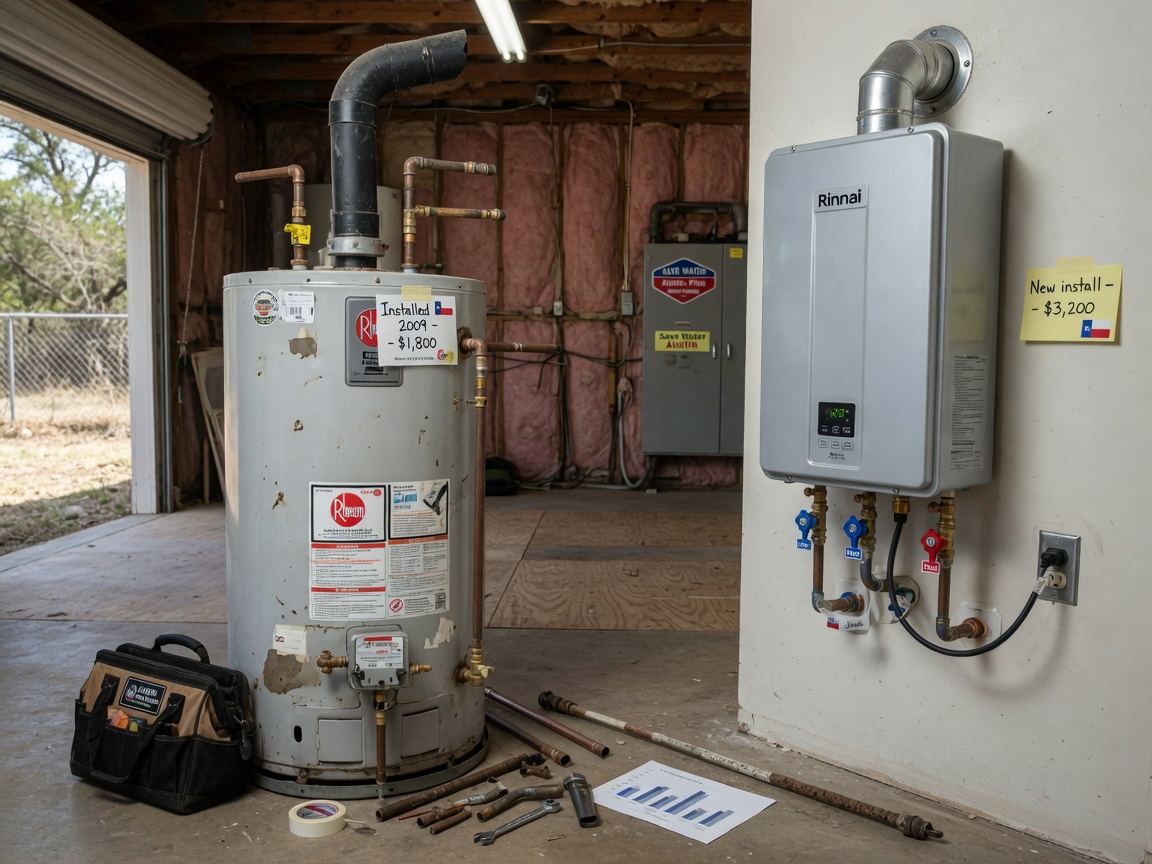
For most homes across Travis County, tankless water heaters deliver better overall performance than tank models because they provide on-demand hot water without standby losses, last 20–30 years instead of 8–12, and fit tighter spaces common in East Austin and South Congress bungalows, though upfront costs run $1,500–$3,500 higher and they may need electrical upgrades in older Downtown buildings.
Upfront Cost and Installation Realities
In Austin's varied housing stock, tank water heaters typically cost $800–$2,000 installed while tankless units start at $2,500–$5,000. Older homes in Clarksville and Hyde Park often require venting modifications or new gas lines that add $400–$1,200 because original plumbing dates back decades. Newer builds in Mueller and Zilker usually accept tankless units with fewer changes. Round Rock and Pflugerville properties built after 2000 frequently have adequate electrical service already, lowering the total for electric tankless models. Homeowners replacing units in Barton Hills should budget extra for permits and inspections that Travis County requires on gas conversions.
Efficiency and Performance in Local Climate
Austin's hot humid summers and mild winters with spring wildflowers change how each system performs on the ground. Tankless water heaters avoid heating 40–80 gallons constantly during 95-degree days, cutting energy use 20–30 percent for families in Westlake or Travis Heights. Tank models lose heat through the tank walls even when mild winters keep groundwater around 65 degrees. In Cedar Park homes with high occupancy, tankless units maintain steady pressure during simultaneous showers and laundry. Tank systems can run out during peak evening use in larger East Austin households, forcing staggered schedules that tankless setups eliminate entirely.
Lifespan and Maintenance Needs
Hard water common in Travis County shortens tank water heater life to 8–12 years while tankless units often reach 20–30 years with annual descaling. Neighborhoods near Lady Bird Lake or Barton Springs Pool see faster mineral buildup that requires flushing every 12 months on tankless models. In older Clarksville homes, sediment from galvanized pipes accelerates tank corrosion, making replacement necessary sooner. Homeowners in Zilker benefit from tankless longevity when they stay in place long-term. Tankless water heater installation crews note that proper maintenance schedules prevent most failures in Pflugerville properties.
Which System Fits Your Austin Home
Choose a tank model for budget-conscious replacements in compact Hyde Park cottages or when existing venting limits options. Select tankless for growing families in Barton Hills or Mueller who want endless supply and lower monthly bills. Properties near the University of Texas Tower or Mount Bonnell with limited mechanical space gain square footage by removing bulky tanks. When Should You Replace Your Water Heater? outlines clear age and performance signals. Lone Star Water Heater Pros remains open 24 hours, 7 days a week for emergency swaps across Austin and nearby Round Rock or Cedar Park when systems fail during peak summer demand.