
2026-08-22 · Jim McGuiness
Water Heater Repair vs. Replacement: Which Makes Sense?
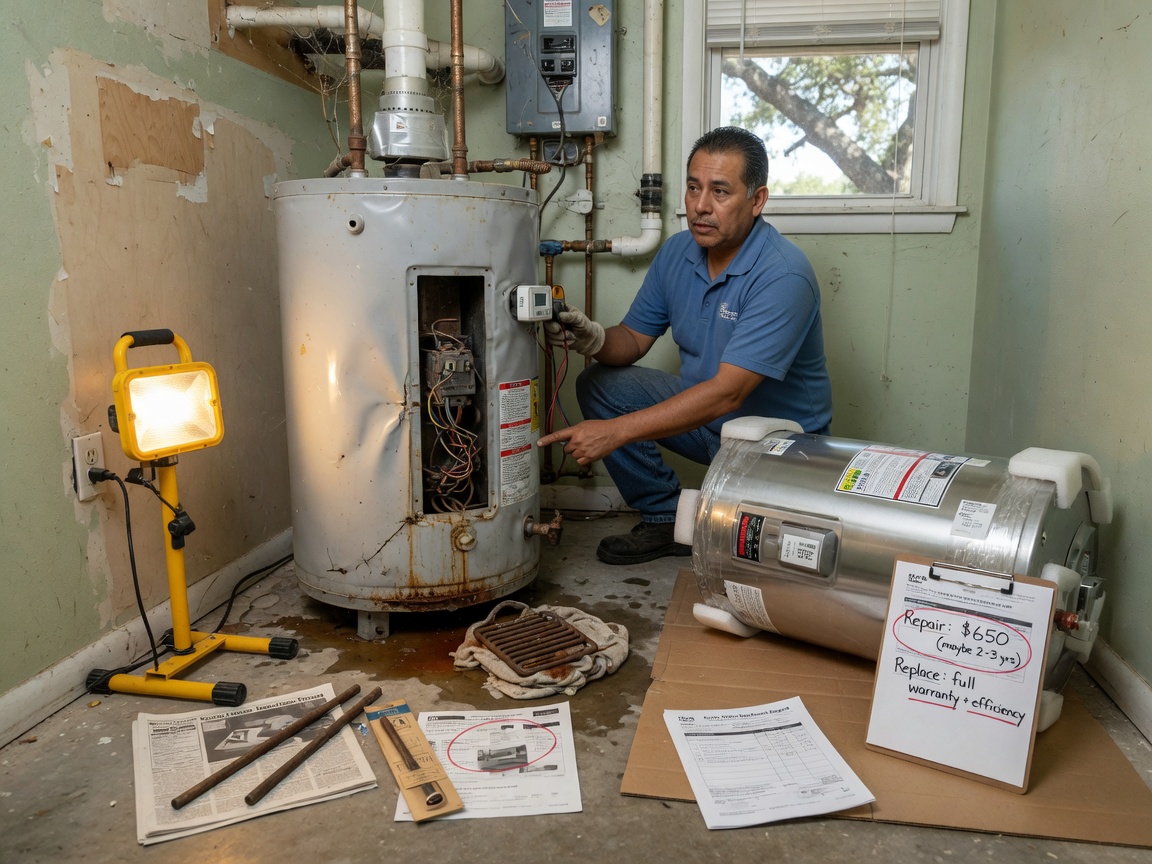
Most Austin homeowners should choose repair when the water heater is under 8 years old and problems stay limited to parts like thermostats or heating elements that run $200–$450, but replacement becomes the practical move once the unit passes 10–12 years, shows tank leaks, or requires multiple service calls in one season.
Age and Failure Patterns in Travis County Homes
Austin neighborhoods such as Hyde Park, Clarksville, and East Austin contain many homes built before 1980 that still hold original 40- or 50-gallon tanks. These older units face constant sediment buildup from the area's mineral-rich water, which shortens element life during hot humid summers. In newer subdivisions around Mueller and Barton Hills, tanks installed after 2010 usually reach 10–12 years before efficiency drops. Mild winters reduce freeze risk yet do nothing to slow internal corrosion once the anode rod depletes. Homeowners in Westlake and Zilker often see scale form faster because of higher water usage near Lady Bird Lake properties. Checking the manufacture date on the tank label gives the clearest first indicator before any repair decision.
Repair Cost Thresholds That Make Sense
A single service visit for a leaking pressure relief valve or bad upper element typically lands between $300 and $550 in Travis County. When that same unit has already needed two visits in the past year, adding another $400–$600 rarely beats the cost of a new standard-efficiency model. Technicians working 24 hours a day, 7 days a week note that electric units in South Congress bungalows often fail at the lower element first, while gas units in Pflugerville and Cedar Park homes lose performance at the thermocouple. Repair stays economical only while total outlay stays below 40 percent of replacement price and the tank itself shows no rust stains on the floor.
Replacement Triggers Common in Austin Housing Stock
Tank leaks, visible rust at the top or bottom seams, and rumbling noises from heavy sediment all point toward replacement rather than another repair. Homes in Downtown and Travis Heights frequently run 50- or 80-gallon units that exceed current household needs, so swapping to a right-sized model improves efficiency. Spring wildflower season brings higher pollen counts that clog air intakes on some gas models, accelerating wear. When the existing heater already runs past the 12-year mark, installing a new unit avoids the risk of sudden failure during peak summer demand. Water Heater Replacement covers both tank and tankless options suited to these older Austin properties.
How Local Weather and Soil Affect the Decision
Hot humid summers in Travis County increase condensation on tanks and pipes, speeding external corrosion in crawl spaces common to East Austin and Zilker homes. Mild winters keep groundwater temperatures stable yet allow mineral scale to harden inside the tank over time. Soil movement around Mount Bonnell and Barton Hills can shift foundations slightly, stressing rigid water lines connected to older heaters. These conditions make proactive replacement attractive once a unit shows any sign of tank wall thinning. Water Heater Repair remains the first step for newer installations in Round Rock and Pflugerville where corrosion has not yet set in.
Practical Next Steps for Austin Homeowners
Start by locating the data plate on your current heater and noting the installation year. Schedule a diagnostic during off-peak hours to confirm whether parts remain available and the tank shell stays sound. Compare the quoted repair total against the installed price of a new 50-gallon unit, factoring in any needed venting or electrical upgrades common in pre-1990 Clarksville houses. Review the article When Should You Replace Your Water Heater? for additional lifespan benchmarks. Lone Star Water Heater Pros stays available 24 hours a day, 7 days a week to inspect units across Downtown, South Congress, and Cedar Park so homeowners can decide with current local pricing in hand.