
2026-08-22 · Jim McGuiness
What Size Water Heater Do You Need?
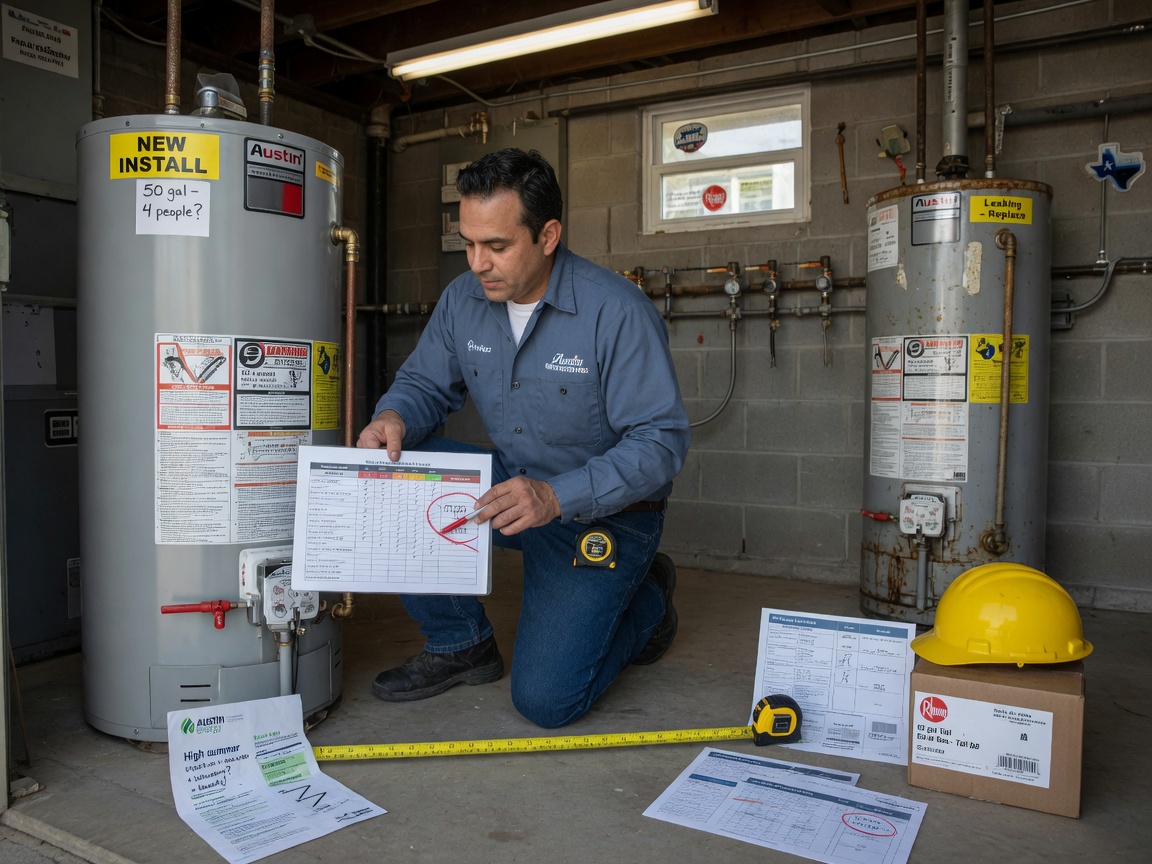
For most Austin homes with three to five residents, a 50- to 80-gallon tank water heater meets daily needs without running short during morning peaks. Larger families or homes with multiple bathrooms often require the upper end of that range, while smaller households in East Austin or Clarksville can sometimes manage with a 40-gallon model. Sizing starts with counting simultaneous uses such as showers, laundry, and dishwashing rather than square footage alone.
Calculating Daily Hot Water Demand
Begin by listing every fixture that draws hot water and estimating minutes of use per person. A standard shower head flows at 2.5 gallons per minute, so a ten-minute shower consumes 25 gallons. Add 15 gallons per load for a washing machine and another 10 gallons for the dishwasher. In Travis County homes, multiply the total by the number of residents and add a 20 percent buffer for simultaneous use. This method prevents oversizing that wastes energy during mild winters or undersizing that leaves residents without hot water after a long day at Zilker Park.
Homes built before 1980 in Hyde Park or Travis Heights often have smaller original piping that restricts flow, so the same gallon rating delivers less effective volume than in newer Mueller construction. Track actual usage for one week during peak summer humidity to refine the estimate before committing to a replacement.
Austin Climate and Seasonal Usage Patterns
Hot humid summers drive higher demand as residents take more frequent showers to cool off, while mild winters reduce standby losses. Spring wildflower season brings visitors and extra laundry loads in neighborhoods like Barton Hills and Westlake. These patterns mean a unit sized only for winter use can fall short from May through September. Soil conditions around Lady Bird Lake also affect outdoor tank placement, where shifting clay can tilt older models and reduce effective capacity over time.
Nearby cities such as Round Rock and Pflugerville share the same Travis County water chemistry, which contains moderate minerals that accumulate faster in oversized tanks left at high temperatures year-round. Adjusting the thermostat seasonally helps maintain efficiency without changing the tank size itself.
Tank Style and Local Housing Stock
Older single-story homes in Clarksville and South Congress often have limited attic or closet space, favoring a standard 50-gallon electric model over taller 80-gallon units. Multi-story properties in Zilker may benefit from a tankless unit installed near the point of use to avoid long pipe runs that cool water before it reaches the tap. Gas models work well in homes already plumbed for natural gas, while electric units suit the many all-electric residences built in the 1990s around the University of Texas Tower area.
Hybrid units add efficiency in conditioned spaces but require adequate airflow around the compressor, a detail often overlooked in compact Downtown apartments. Always verify clearance and venting requirements before selecting the gallon rating.
Installation Considerations in Travis County
Permit rules in Austin require proper seismic strapping and expansion tanks on every new installation. Crews working in Cedar Park or Pflugerville frequently encounter narrow driveways that limit equipment access, so smaller 50-gallon units move more easily than 80-gallon tanks. Water pressure varies by elevation near Mount Bonnell, and higher pressure can increase flow rates, making accurate demand calculations even more important.