
2026-08-22 · Jim McGuiness
Gas Water Heater Installation: Complete Guide
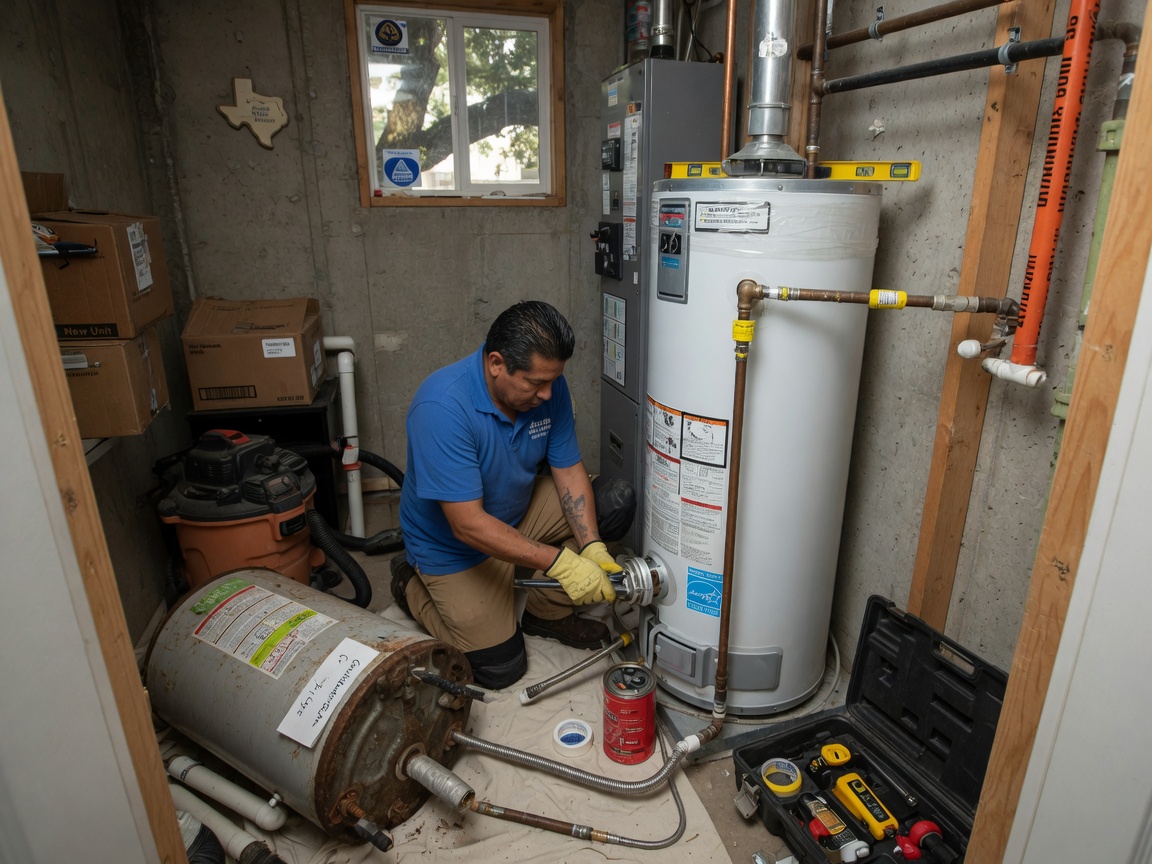
A gas water heater installation in Austin typically takes 4 to 8 hours once the crew arrives, depending on whether the home has accessible venting and if the existing 40-gallon or 50-gallon tank needs full removal first.
Preparing Your Austin Home for Gas Water Heater Installation
Homeowners in neighborhoods such as Hyde Park and Clarksville often discover galvanized pipes from the 1940s that must be updated before a new unit can connect safely. Check the shutoff valves near the current heater and clear a 3-foot workspace around it. In Travis County homes near Lady Bird Lake, confirm that the venting path runs straight through an exterior wall rather than into an attic shared with neighbors. Measure the space to ensure the new model fits without blocking access to the garage or utility closet. Review your current gas line size, as many Barton Hills properties require an upgrade from 1/2-inch to 3/4-inch pipe to maintain proper pressure during peak summer use.
Step-by-Step Gas Water Heater Installation Process
Technicians begin by turning off the gas at the meter and draining the old tank completely. They disconnect the water lines, gas supply, and vent pipe before removing the unit through the nearest door or window. The new heater is set on a level platform, then the cold and hot water connections are made with dielectric unions to prevent corrosion. Gas piping is tested for leaks using soapy water, and the vent is secured with screws every 12 inches. Finally, the unit is filled, the gas is restored, and the pilot is lit while checking for proper flame color. This sequence prevents carbon monoxide issues common in older East Austin bungalows where venting was originally installed for smaller heaters.
Austin Climate and Terrain Factors That Affect Installation
Hot humid summers in Travis County push gas water heaters to cycle more often, so installers size units based on the number of bathrooms rather than square footage alone. Mild winters with occasional freezes mean outdoor pipes in Zilker and Mueller need insulation sleeves even on indoor units. Spring wildflowers signal the start of higher groundwater levels that can affect basement or crawl-space installations near Mount Bonnell. Crews working in Westlake or Travis Heights often contend with sloped lots that require extra strapping to meet seismic and wind codes even though earthquakes are rare. These conditions make proper expansion tank placement essential to avoid pressure spikes during rapid temperature changes.
When to Schedule Gas Water Heater Replacement in Travis County
Most 40-gallon and 50-gallon gas models last 8 to 12 years in Austin before sediment from hard water reduces efficiency. If your unit is in a Downtown high-rise or South Congress cottage and shows rust around the base, plan replacement before the next humid summer. Homes in Pflugerville and Cedar Park built in the 1990s frequently need updates when adding a second bathroom. Scheduling during milder spring months avoids the rush that follows July heat waves. For guidance on timing your project, review When Should You Replace Your Water Heater? and compare it with your unit's age and recent repair history.
Post-Installation Maintenance Tips for Austin Homes
Flush the tank every six months to remove mineral buildup accelerated by Austin's water supply. Check the anode rod annually, especially in homes near Barton Springs Pool where slightly acidic water shortens rod life. Set the temperature to 120 degrees to balance comfort and energy use during long humid summers. Keep the area around the heater clear of stored items to maintain airflow. For ongoing care tailored to Texas conditions, see How to Maintain a Water Heater in Texas. Lone Star Water Heater Pros remains available 24 hours a day, 7 days a week for any follow-up questions after the install.