
2026-08-22 · Jim McGuiness
How to Choose the Right Water Heater for Your Home
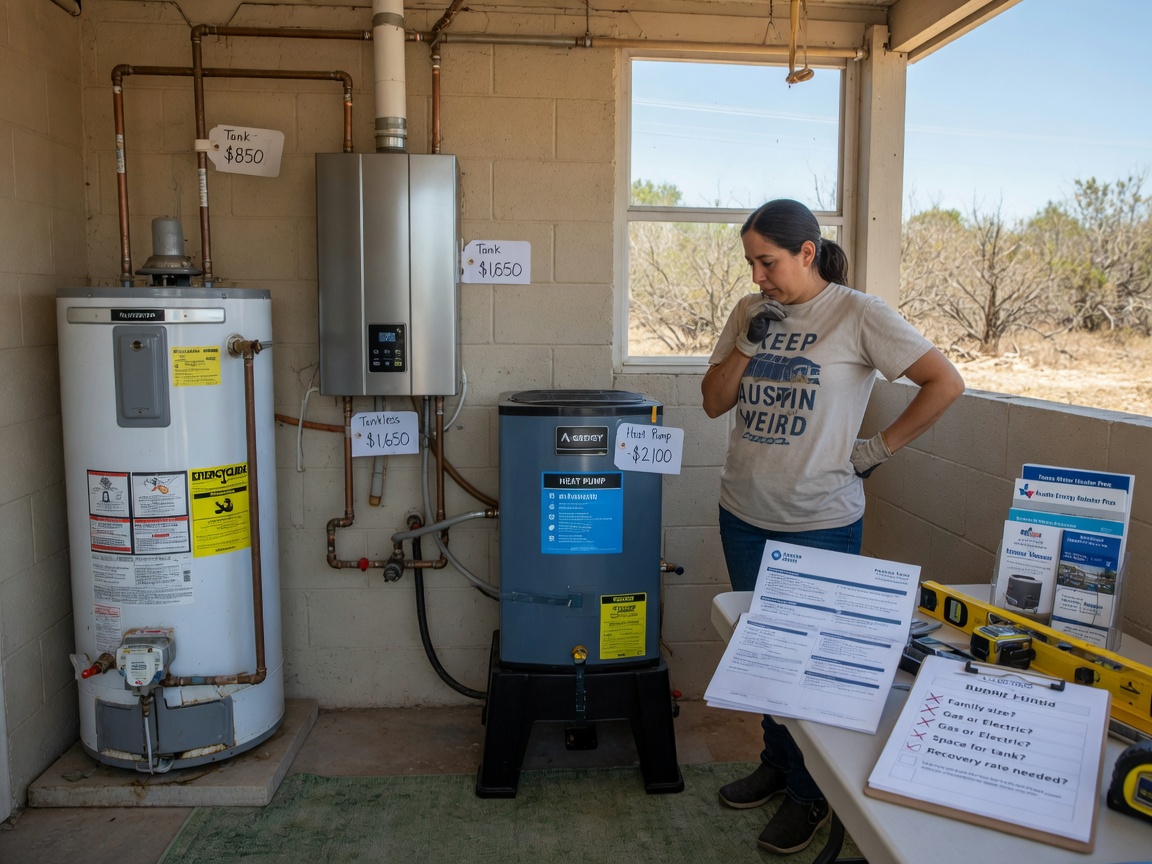
The right water heater for your Austin home starts with matching capacity and fuel type to household size and daily demand, typically a 50-gallon gas unit for three to four people or a tankless model delivering 3-5 gallons per minute for larger families in Travis County.
Assess Household Size and Daily Demand
Start by counting simultaneous hot water users in your home. A two-person household in Clarksville or Zilker often manages with a 40-gallon tank, while families in Barton Hills or Mueller with teens and multiple bathrooms need 65- to 80-gallon capacity or a high-output tankless unit. Track peak usage during morning showers and evening laundry to avoid undersizing. Homes built before 1980 in Hyde Park and Travis Heights frequently have smaller original piping that restricts flow, so measure existing supply lines before deciding. Oversized units waste energy in mild winters, while undersized ones run constantly during humid summer peaks when groundwater arrives warmer but demand spikes from outdoor rinsing and cooling needs.
Compare Fuel Types Common in Austin
Natural gas remains the dominant choice across South Congress and Westlake because it delivers faster recovery in hard water conditions common to Travis County aquifers. Electric models suit all-electric homes in newer Mueller developments where gas lines were never installed. Hybrid heat pump units perform well in Austin's mild winters but require 10 by 10 feet of clear space around the unit for airflow. Tankless gas units cut standby losses in East Austin bungalows with limited utility closets. Always verify vent clearances and gas line sizing on older properties before switching fuel types.
Factor in Local Climate and Water Conditions
Hot humid summers accelerate scale buildup inside tanks from mineral-rich water drawn from the Edwards Aquifer, shortening life by 1-2 years compared to drier regions. Mild winters reduce freeze risk but still require proper insulation on exposed pipes in Mount Bonnell or Barton Springs Pool area homes. Spring wildflower season brings pollen that can clog outdoor intake vents on tankless units. Soil movement in clay-heavy East Austin lots shifts foundations and can stress rigid vent pipes, so flexible connectors and proper strapping matter during Water Heater Installation.
Tank Versus Tankless Performance
Traditional tanks provide steady pressure but occupy floor space and lose heat overnight. Tankless units save space in compact Downtown or University of Texas Tower area condos and deliver endless hot water, yet they require larger gas lines and dedicated electrical circuits. In older Clarksville homes with 3/4-inch gas supply, a tankless retrofit often needs a line upgrade. Review expected lifespan data in the post How Long Do Water Heaters Last in Texas? to weigh long-term costs. Hybrid models combine both approaches for efficiency in Pflugerville and Cedar Park homes with high summer utility bills.
Plan for Installation and Future Needs
Measure available space, ceiling height, and door widths before purchase because many 1920s-1950s homes in Travis Heights have narrow basement stairs. Check for seismic strapping requirements even though Austin sees low earthquake activity. Schedule service with a team open 24 hours, 7 days a week so weekend or late-night leaks do not disrupt family routines. Review the guide When Should You Replace Your Water Heater? to time replacement before failure during peak summer demand. Proper sizing and venting now prevent callbacks and keep operating costs predictable across Round Rock and surrounding communities.