
2026-08-22 · Jim McGuiness
Tankless Water Heater Installation: Complete Guide
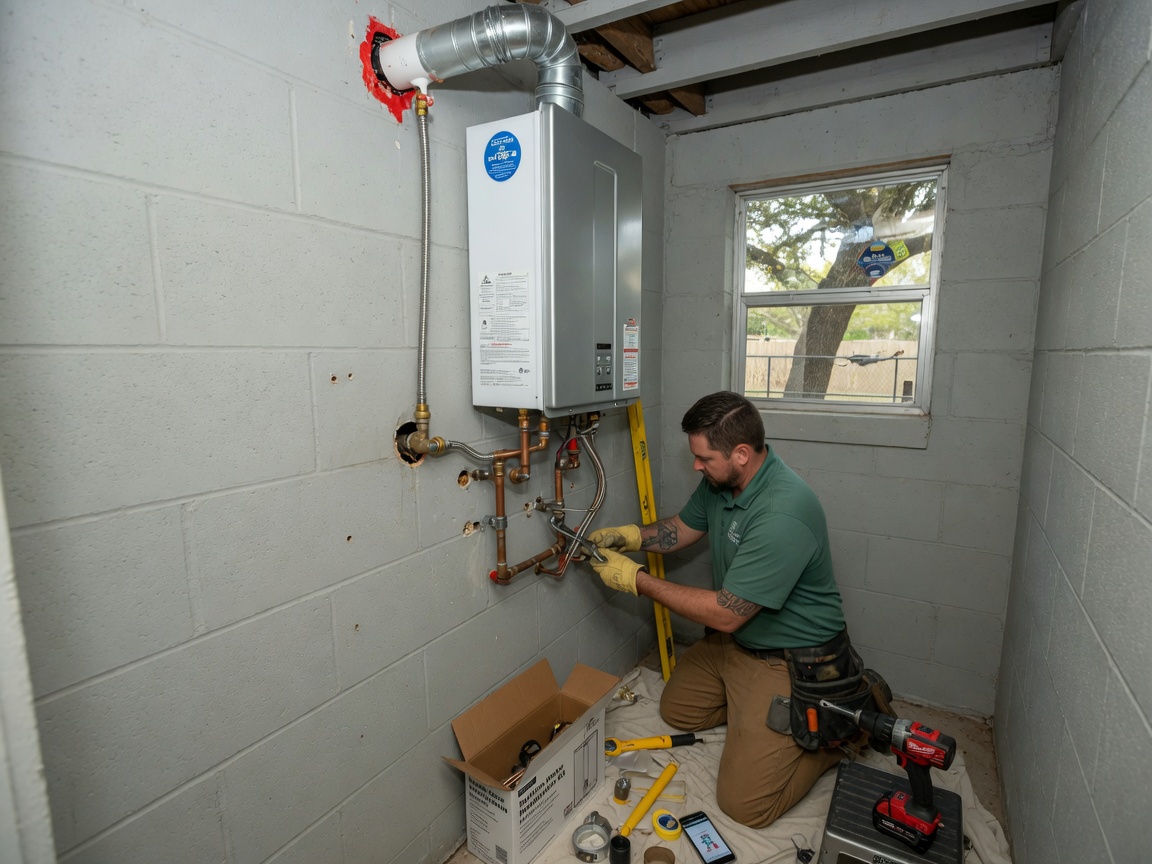
Tankless water heater installation in Austin homes usually requires 4 to 8 hours on site once the unit and venting are selected, though older properties in neighborhoods such as Hyde Park or Clarksville often need extra time for gas line upgrades or electrical adjustments. The process starts with confirming the home's peak demand and existing infrastructure before any work begins.
Understanding Tankless Systems
Tankless units heat water on demand rather than storing it, which suits Austin's variable household sizes and the hot humid summers that drive higher usage from May through September. In Travis County, where mild winters rarely drop below freezing, these systems avoid the standby losses common with traditional tanks during the spring wildflower season when temperatures stay moderate. Homeowners in areas like Zilker or Barton Hills often choose gas models for their higher flow rates needed during peak morning routines. Electric options work better in smaller Downtown condos with limited venting space. Proper sizing prevents cold-water surprises during simultaneous showers and laundry loads common in family homes across East Austin.
Site Assessment for Local Homes
Every installation begins with a walkthrough to measure flow rates at fixtures and inspect the existing gas line diameter, electrical service, and venting paths. In South Congress bungalows built decades ago, plumbers frequently discover undersized lines that must be replaced to support the higher BTU draw of a tankless unit. Westlake properties with multi-story layouts may require additional recirculation pumps to deliver instant hot water to distant bathrooms. Mueller new-builds often have modern infrastructure that simplifies the swap, while Travis Heights hillside homes need careful condensate drainage planning due to the terrain. Checking water pressure from the Austin municipal supply helps avoid scaling issues that accelerate in the region's hard water.
Step-by-Step Installation Process
After assessment, technicians shut off utilities and remove the old tank if replacing one. Mounting the new unit on an exterior wall or in a utility closet follows, with 3-inch or 4-inch stainless venting run through the roof to handle combustion gases safely. Gas line upgrades come next, often using 1-inch black iron pipe in older East Austin homes to meet demand. Electrical connections power the ignition and controls, then water lines are tied in with isolation valves for future service. Final testing runs hot water at multiple points to verify temperature stability and checks for leaks before restoring full service. Crews working in Pflugerville or Cedar Park follow the same sequence but account for longer drive times between jobs.
Key Considerations in Austin
Austin's hot humid summers increase daily hot water demand, so units must handle continuous flow without temperature drops during evening use after outdoor activities at Zilker Park or Barton Springs Pool. Mild winters reduce freeze protection needs compared to northern climates, yet occasional cold snaps still require proper insulation on exposed lines. Soil conditions in low-lying areas like parts of Mueller can affect outdoor unit placement and condensate routing. Homeowners near the University of Texas Tower or Lady Bird Lake often prioritize compact indoor models to preserve space in smaller lots. Always verify local permits through Travis County before starting work.
Maintenance After Installation
Annual descaling with vinegar solution removes mineral buildup from Austin's water supply and keeps the heat exchanger efficient. Homeowners should flush the system every 12 months, especially after the heavy summer usage period. Checking the air intake filter monthly prevents dust accumulation common in dry spring months. For questions about long-term performance versus traditional tanks, see When Should You Replace Your Water Heater?. Units typically last 15 to 20 years with consistent care. Lone Star Water Heater Pros remains available Open 24 Hours, 7 days a week for any follow-up needs across Round Rock and surrounding communities.